ElastaPro Requalifies Four Military Fluorosilicones
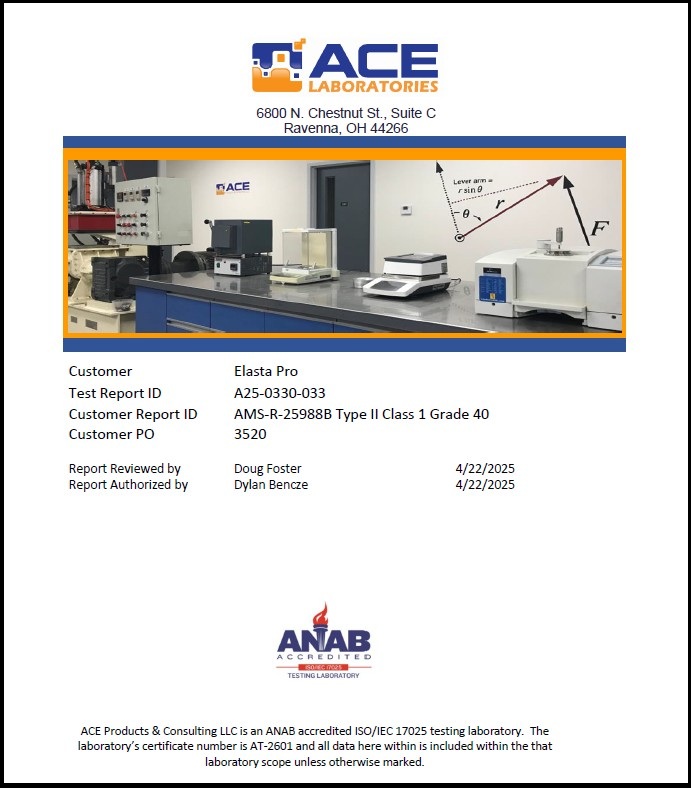
SANTA FE SPRINGS, CA – May 27, 2026 – ElastaPro, North America’s largest supplier of solid silicone sheet, is announcing that ACE Laboratories has requalified four of its military fluorosilicones. The ISO/IEC 17025 accredited independent laboratory recently tested samples of ElastaPro materials for conformance with the following specifications:
- AMS-R-25988B Type II, Class 1, Grade 40
- AMS-R-25988 Type II, Class 1, Grade 50
- AMS-R-25988B Type II, Class 1, Grade 60
- AMS-R-25988B Type II, Class 1, Grade 70
AMS-R-25988 is an SAE International spec that is used by the U.S. military. It incorporates and supersedes MIL-DTL-25988, which the U.S. Defense Logistics Agency (DLA) made inactive for new designs on June 11, 2025. MIL-DTL-25988 still appears on older part drawings, however, and some military buyers cite it during procurement activities.
Requalification Test Reports Available
ElastaPro will send the full requalification test reports to qualified buyers who request them. Each report provides detailed test results and includes test methods and conditions. For example, the reports include the results of testing against ASTM D471 and ASTM D2240, standards that prescribe material aging at 70 hours at 121° C in AMS 3400 fluid prior to testing.
ElastaPro is a trusted supplier to the defense and aerospace industries and manufactures all its silicone and fluorosilicone materials in the United States in accordance with a quality management system that is AS9100D and ISO9001 certified.
Why Requalify Materials?
ElastaPro offers a broad portfolio of spec-grade elastomers, including military silicones and fluorosilicones, and provides a full Certificate of Analysis (COA) with every batch. The Made in USA manufacturer sources raw materials from friendly sources and welcomes customer questions about the origins of its ingredients.
This is especially important for buyers who need full traceability. For military fluorosilicones, requalification is valuable because it means that a material has undergone a formal re-testing and verification process to prove that it still meets the technical, physical, and chemical requirements of the governing specification.
Typically, compounders only requalify an elastomer when there’s a change in manufacturing process, movement to a new production line or facility, or a change in raw materials. ElastaPro’s commitment to requalification comes at a time when demand for military fluorosilicones is high because of defense modernization and buyers want to avoid unfriendly or unreliable sources.
MIL-DTL-25988 and AMS-R-25988 Fluorosilicones
MIL-DTL-25988 and AMS-R-25988 cover the same material family, FVMQ fluorosilicones, but they differ in ownership, structure, and classification. MIL-DTL-25988 replaced the older MIL-R-25988 spec and defines performance requirements. AMS-R-25988 meets MIL-DTL-25988C requirements and is used not only by defense contractors, but also by the commercial aerospace industry.
The ElastaPro AMS-R-25988 military fluorosilicones that were requalified are all Type II (sheet) materials with a Class 1 designation that indicates their suitability for general-purpose use. Their Grade refers to the material’s hardness (durometer) on the Shore A scale. These materials include 40-durometer (Grade 40), 50-durometer (Grade 50) and 70-durometer (Grade 70) elastomers.
About ElastaPro
ElastaPro is a U.S. silicone company in Santa Fe Springs, California, that was founded by a team of silicone industry veterans with decades of experience in silicone sheeting and compounding – and a passion for enhancing the customer experience. ElastaPro is AS9100- and ISO 9001-certified and a member of the Gasket Fabricators Association.
Choosing the Right Silicone Company
Selecting the right silicone company isn’t just about price or lead time — it’s about whether the material you receive will perform reliably in your application, meet the right specification, and arrive with the traceability and quality controls your industry requires. The right silicone partner understands not only the material, but the environment, regulatory requirements, and failure modes your product faces.
Below is a more technical look at how silicone grades differ, why those differences matter, and how to evaluate a supplier before you commit.
Why Silicone Grade Selection Matters
Different industries don’t just “prefer” certain silicone grades — they depend on them. The wrong grade can lead to swelling, compression‑set failure, thermal breakdown, or regulatory non‑compliance.
Here’s how specific grades map to real‑world engineering needs:
Aerospace & Defense
AMS‑grade silicones (AMS 330X, 33XX, 3357, etc.) are engineered for:
- Thermal cycling from –65°F to +500°F
- Dimensional stability under load
- Low compression set for long‑term sealing
- Traceability and AS9100D‑level documentation
Why it matters: A gasket that loses 20% sealing force in an avionics bay can cause moisture ingress, signal interference, or catastrophic system failure. AMS‑grade materials prevent that.
Medical & Life Sciences
Medical‑grade silicones (USP Class VI, ISO 10993) are designed for:
- Biocompatibility
- Sterilization resistance (autoclave, gamma, EtO)
- Extractables/leachables control
Why it matters: A tubing or seal used in a respiratory device must not leach compounds into the airflow or degrade after repeated sterilization cycles.
Food & Beverage
FDA‑compliant silicones (21 CFR 177.2600) offer:
- Non‑toxic formulation
- Odor and taste neutrality
- High‑temperature stability for ovens, mixers, and processing equipment
Why it matters: A gasket that imparts odor or breaks down under heat can contaminate product batches and trigger recalls.
Oil, Gas & Fuel Systems
Fluorosilicone (FVMQ) is required for:
- Fuel, oil, and solvent resistance
- High‑temperature sealing
- Low swell in aromatic hydrocarbons
Why it matters: Standard silicone swells dramatically in fuel. Fluorosilicone prevents dimensional change and seal failure in fuel‑wet environments.
Technical Comparison Chart: Silicone vs. Fluorosilicone vs. Specialty Grades
| Property / Requirement | General‑Purpose Silicone | Fluorosilicone (FVMQ) | AMS‑Grade Silicone | Medical‑Grade Silicone |
|---|---|---|---|---|
| Temperature Range | Excellent | Excellent | Excellent | Excellent |
| Fuel / Oil Resistance | Poor | Excellent | Poor | Poor |
| Compression Set | Good | Good | Very Low | Good |
| Traceability | Moderate | High | Very High | High |
| Regulatory Requirements | Varies | Aerospace/Defense | AMS‑Certified | USP Class VI / ISO 10993 |
| Typical Industries | Industrial, HVAC | Aerospace, Fuel Systems | Aerospace, Defense | Medical, Life Sciences |
Checklist: How to Choose a Silicone Company
1. Material Expertise
- Can they explain the difference between silicone, fluorosilicone, and specialty grades?
- Do they understand your industry’s regulatory requirements?
2. Specification Compliance
- Do they supply AMS, MIL, FDA, or medical‑grade materials with documentation?
3. Traceability
- Do they provide lot‑level traceability and certs?
4. Quality System
- Are they AS9100D or ISO 9001:2015 certified?
5. Manufacturing Capabilities
- Do they compound their own silicone?
- Can they produce sheet, roll, molded parts, and uncured compound?
6. Lead Times & Responsiveness
- Can they support prototypes, low‑volume runs, and production scale?
7. Technical Support
- Do they help you select the right grade based on environment, fluids, and failure modes?
8. Consistency
- Are durometer, tensile, elongation, and compression‑set values consistent across batches?
9. Customization
- Can they adjust durometer, color, or cure system?
10. Documentation
- Do they provide certs, test reports, and compliance statements?
11. Supply Chain Stability
- Are materials Made in USA?
- Do they control their own compounding?
12. Application Understanding
- Do they ask about temperature, fluids, load, geometry, and regulatory constraints?
ElastaPro is the Silicone Company You Need
ElastaPro combines U.S.‑made silicone, in‑house compounding, and AS9100D‑level quality to support aerospace, medical, industrial, and high‑performance applications. Whether you need AMS‑grade sheet, FDA‑compliant materials, or fuel‑resistant fluorosilicone, we deliver consistent, traceable, engineering‑grade silicone built for demanding environments.
Silicone Requalification: Know the Risks and Costs

Buying silicone sheeting and uncured compound might seem like a low-risk activity, even when you’re purchasing spec-grade materials. A silicone that’s “qualified” meets mechanical, chemical and regulatory requirements and can remain in the same bill of materials (BOM) for years. In an age of global sourcing, however, believing that a compound won’t change is risky.
Silicone Compounds and Silicone Ingredients
Silicone compounds contain numerous ingredients. Examples include fillers, colorants, and flame retardants – just to name a few. Changing one key ingredient can affect an entire compound’s mechanical properties, thermal stability, compression set, and cure profile. Ingredient substitution can also negate a compound’s compliance with a standard or regulation.
Even if you’re buying domestically manufactured silicones, those compounds probably contain ingredients that come from nations where there’s a risk of a supply chain shut-off. If a key ingredient suddenly becomes unavailable, your compounder will look for another source. Failure to find a replacement isn’t the only threat to your supply chain, however.
This article from ElastaPro examines the risks and costs associated with silicone requalification, a lengthy and expensive process that could become necessary because of ingredients. As you continue reading, remember that supply chain resilience isn’t just about where a silicone compound is made. It’s also about where its ingredients come from.
Medical Silicone Example
Imagine that you’ve been buying a U.S.-made medical grade silicone that contains a key ingredient from a nation with which the United States has serious disputes. The ingredient suddenly becomes unavailable because of a geopolitical disruption, a trade war, or because of a plant shutdown caused by a personnel issue.
The compounder substitutes a chemically similar ingredient and tells you that the new material is equivalent. There’s a problem, however. Medical-grade silicones must comply with standards such as ISO 10993, USP Class VI, and FDA 21 CFR 177.2600. Because of the substitution, there’s a risk that the compound that you’ve been buying is no longer biocompatible.
The way to address this risk isn’t by reviewing your supplier’s internal testing data. You’ll need to requalify the entire compound, a process that’s especially demanding in regulated industries like medical device manufacturing. In addition to mechanical and physical testing, there’s chemical, analytical, and standards-specific testing to perform.
Depending on the medical device’s class, you may need to update FDA Master File references, the Design History File (DHF), and the Device Master Record (DMR). There’s also risk management documentation to compile and supplier qualification records to review.
Military Silicone Example
Military silicones offer another example of where an ingredient substitution can put projects, your business, and potentially national security at risk. Imagine that you’re a buyer for a defense contractor that needs A-A-59588 silicones. More specifically, you need a Class 3B silicone. You find a vendor that supplies this material and offers a Certificate of Conformance (COC).
That type of cert is useful, but it simply states that a product meets standards or specifications. In other words, it doesn’t contain test-level data for your specific batch of materials. This is a problem because, at some point, the supplier made an ingredient substitution that reduced the compound’s flex resistance or heat age so that it no longer meets A-A-59588 Class 3B requirements.
When the compound fails during testing, you raise the issue with your supplier. That’s when you learn that the compounder had switched sources for a key ingredient. The new ingredient was less expensive, but the supplier is located in a country that’s not authorized to supply U.S. defense projects. The status of your project just went from bad to worse.
How to Reduce Costs and Risks
Silicone compounders that buy ingredients from risky sources can put more than just your supply chain at risk. In the medical, food processing, aerospace, and defense industries, it’s critical to use compounds that meet industry standards or regulatory requirements. And buying a “cheap silicone” won’t prevent you from having to pay for expenses like requalification.
At ElastaPro, we work closely with buyers so that they understand not just what they’re specifying, but where it comes from and how secure that supply chain really is. We also provide a full Certificate of Analysis (COA) with every batch and welcome your questions about the origins of our raw materials, which come from friendly sources rather than risky ones.
Do Your Spec-Grade Silicones Contain Risky Raw Materials?
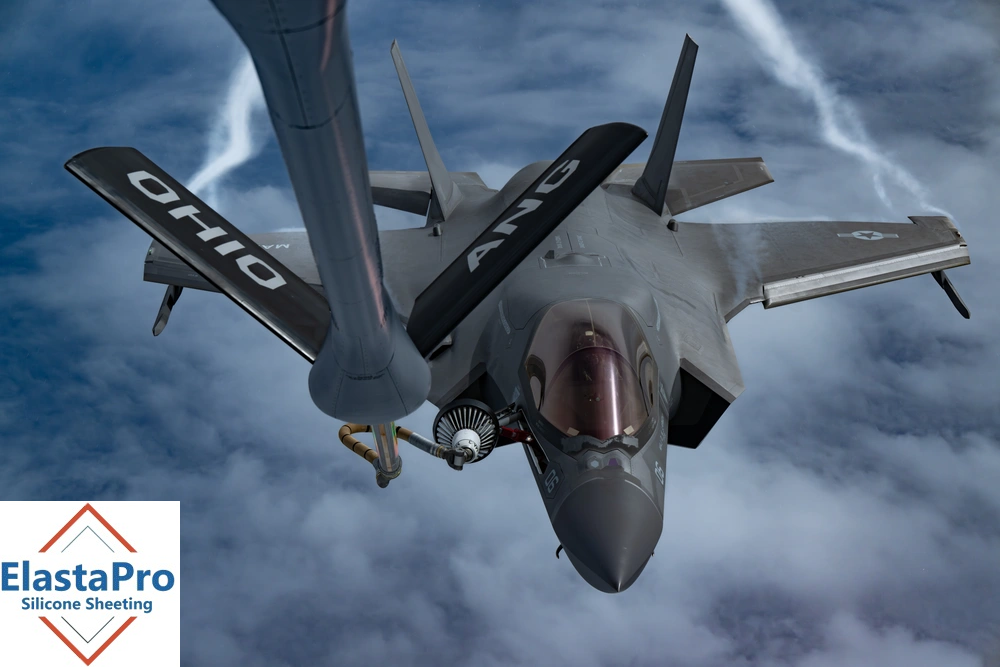
Material specifications are a matter of mission assurance in defense, aerospace, nuclear, and healthcare applications. Engineers diligently call out ASTM standards, AMS specs, and approved suppliers – and rightfully so.
But there’s a critical question that often goes unasked. Where do the raw materials that make up your spec-grade materials come from?
Do You Know What’s in Your Silicone?
Silicone is a perfect example. The finished compound might be manufactured by a reputable U.S. based company, but what about key ingredients like these?
- Polydimethylsiloxane (PDMS) from which silicone bases are made
- Additives like heat stabilizers, flame retardants, and colorants
- Catalysts like peroxides and platinum system
Today, the raw materials in silicones are heavily sourced from overseas suppliers. China controls almost 75% of global silicon metal production and more than 55% of PDMS supply – and they’re still investing.
That’s not a minor dependency. It’s a strategic vulnerability embedded in your bill of materials.
Which Questions Do You Need to Ask?
Reshoring efforts are gaining momentum, and some silicone producers are making real investments in supply chain transparency and domestic or allied-nation sourcing. But the burden shouldn’t fall solely on manufacturers.
End users and procurement teams need to ask tougher questions.
- What are the countries of origin for the base polymer and key ingredients?
- Are there geopolitical risks in the upstream supply chain?
- What happens to lead times and pricing if trade conditions change overnight?
How Secure is Your Supply Chain?
At ElastaPro, we believe that supply chain literacy and friendly nation sourcing are part of the job. That’s why we work closely with customers in critical industries to help them understand not just what they’re specifying, but where it comes from and how secure that supply chain really is.
“Made in the USA” on a datasheet is a starting point. It’s not the full story.
If your application can’t afford supply chain disruptions, it’s time to have a supplier conversation that goes deeper than the spec sheet. Let’s talk about what’s in your materials – and whether those ingredients come from nations you can count on.
Medical Silicone Sheeting: Engineered Materials for Healthcare
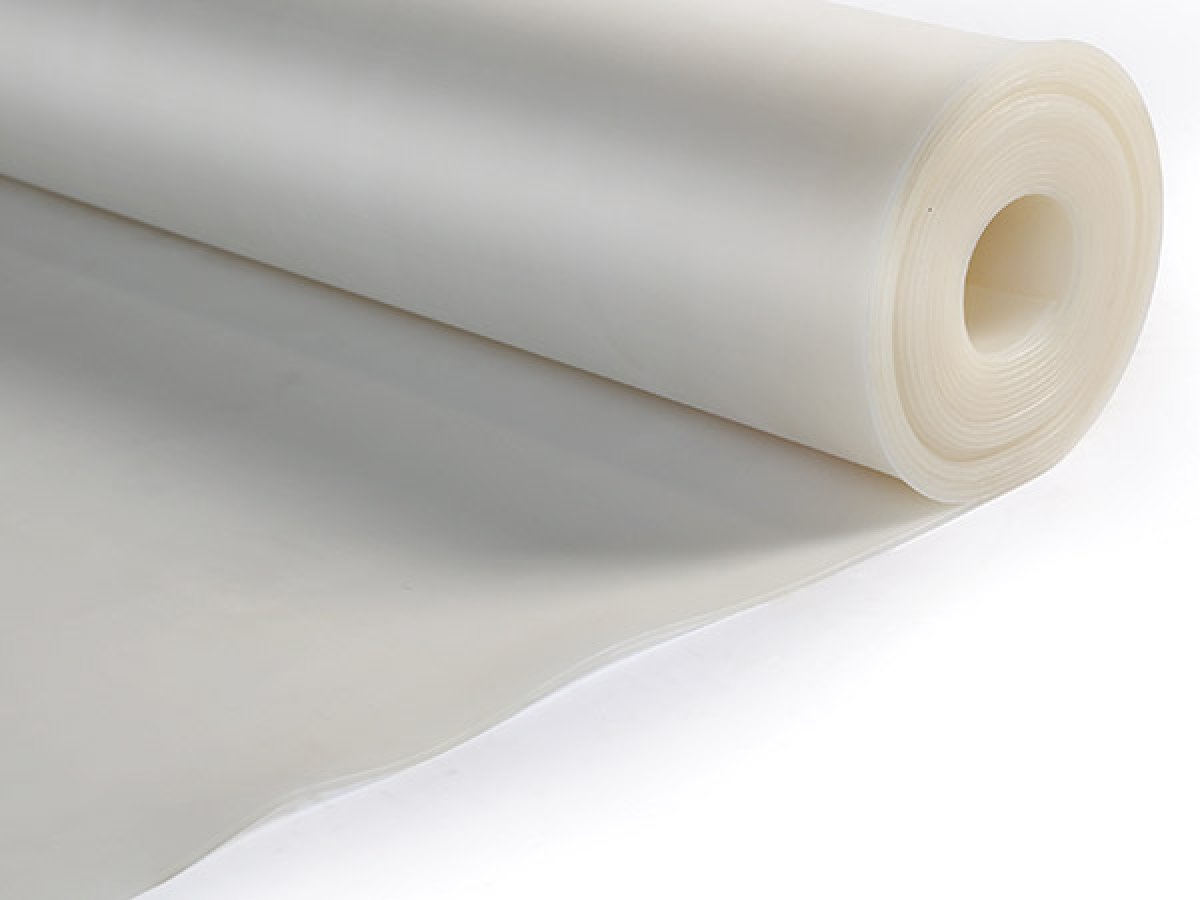
Medical silicone sheeting plays a critical role in healthcare applications that require performance, stability, and biocompatibility under demanding conditions. Unlike general purpose grade silicone, medical grade silicone is engineered to meet stringent regulatory, mechanical, and environmental requirements. That’s what makes medical silicones safe for contact with human skin, blood and fluids, or living tissue. It’s also why these biocompatible materials can withstand repeated sterilization cycles.
Medical Silicone Sheeting: Durometers, Widths, and Thicknesses
ElastaPro produces medical silicone sheeting in controlled formulations and to durometers, widths, and thicknesses that medical OEMs need. At our Made in USA manufacturing facility, we calendar medical grade silicones into solid sheets that arrive ready for die cutting or other fabrication methods. These materials are easy to cut or convert and provide a superior gasket and sealing solution.
- Durometers range from 10 to 70 Shore A.
- Widths up to 60” wide are available
- Thicknesses range from .007” to .500”
ElastaPro’s medical silicone sheeting is typically translucent, but various colors (including custom color matching) are achievable. We can also supply silicone rolls that are slit-to-width for automated cutting operations. No matter what you order, you’ll receive medical silicones that are free from unpleasant smells and odors, organic plasticizers, and phthalates.
Platinum Curing vs. Peroxide Curing
ElastaPro’s medical silicone sheeting is platinum-cured instead of peroxide-cured to minimize extractables and leachables, eliminate peroxide by-products, and provide the stability that FDA Title 21 CFR 177.2600 requires. Platinum-cured silicones also exhibit low volatility and consistent mechanical behavior across a wide temperature range. In addition, they have excellent clarity in translucent grades. ElastaPro can provide peroxide-cured materials for healthcare applications, but post-curing is required.
Biocompatibility and Compliance
Biocompatibility is a key characteristic of ElastaPro’s medical silicone sheeting. In addition to FDA Title 21 CFR 177.2600 requirements, these materials are engineered to comply with USP Class VI, ISO 10993, and Ph. Eur Monograph 3.19 from the European Pharmacopoeia. As our Healthcare Grade Silicone Sheeting Certification shows, USP Class VI and ISO 10993 studies were performed for test items ranging from 10 to 70 durometer (Shore A) and showed no relevant biological effects.
- USP Class VI studies include acute system toxicity, intracutaneous toxicity, and short-term implantation (less than 29 days).
- ISO 10993 studies include cytotoxicity, hemolysis, pyrogenicity, sensitization, dermal irritation, and implantation (90 days).
Mechanical Performance
Mechanical performance is another key characteristic of ElastaPro’s medical silicone sheeting. These materials maintain their elasticity, tear strength, and tensile properties even after repeated sterilization by autoclave, gamma, or ethylene oxide (EtO) methods. They also retain their modulus and compression set characteristics for reliable sealing and cushioning in medical devices that undergo repeated use.
In sealing and fluid management applications, silicone’s low compression set and resistance to swelling are essential. Parts cut from medical silicone sheets can form reliable seals under low pressure for use in lightweight housings and compact devices. Because silicone is inherently inert and hydrophobic, it resists swelling in aqueous environments and maintains dimensional stability when exposed to biological fluids, such as in diagnostic and therapeutic systems.
Thermal Stability and Environmental Resistance
ElastaPro’s medical silicone sheeting also provides excellent thermal and environmental resistance. These materials remain functional from approximately −80°F to +450°F, supporting their use in sterilization chambers, heated fluid paths, and outdoor or transport‑exposed medical equipment. At intermittent temperatures, ElastaPro’s medical silicone sheets resist heat up to 500°F. Medical silicone sheets also resist UV, ozone, and oxidation for long‑term reliability in portable devices and emergency equipment.
Choose High-Quality Medical Silicone Sheeting
ElastaPro makes medical silicone sheeting from high-quality raw materials and provides a Certificate of Analysis (COA) with every batch. Our precision calendaring ensures uniform thickness and a consistent surface finish, attributes that support efficient cutting and conversion processes. To request a quote or discuss your healthcare application, contact ElastaPro.
Medical Grade Silicones from ElastaPro

Medical grade silicones from ElastaPro are used for sealing and gasketing in medical devices and equipment. These platinum-cured materials meet FDA Title 21 CFR 177.2600, USP Class VI, ISO 10993, and European Pharmacopoeia requirements. ElastaPro manufactures medical silicones in the United States and supplies them as solid sheets, continuous rolls, and uncured compounds.
Silicone Product Manufacturers USA
Looking for silicone product manufacturers USA? ElastaPro stands out among U.S. silicone product manufacturers by combining technical expertise, diverse product grades, and customer-focused service, making it the best choice for engineers and manufacturers. Contact us to request a quote or to discuss your application.
USA Silicone Product Manufacturers
The United States hosts a competitive landscape of silicone manufacturers, supplying industries from aerospace and automotive to healthcare and food processing. These companies produce silicone in various forms—solid sheets, sponge, foam, and uncured compounds—each tailored to specific applications. Engineers rely on silicone for its temperature resistance, chemical stability, and flexibility, making it indispensable for seals, gaskets, medical devices, and high-performance components.
While many suppliers offer silicone materials, the differentiating factors often come down to grade variety, compliance with standards, and responsiveness to customer needs. This is where ElastaPro excels.
Why ElastaPro is the Best Choice Among U.S. Silicone Product Manufacturers
ElastaPro, headquartered in Santa Fe Springs, California, is a Made-in-USA silicone supplier specializing in solid and cellular sheets as well as uncured compounds. Founded by industry veterans, our company leverages decades of experience to deliver materials that meet stringent specifications across multiple sectors.
Key advantages include:
- Extensive Grade Options: ElastaPro offers commercial, general purpose, FDA-compliant, medical (USP Class VI), fuel- and solvent-resistant, electrically conductive, fiberglass-reinforced, extreme temperature, flame-retardant, and metal-detectable grades.
- Customization: Customers can specify durometer (20–90 Shore A), thickness, width, and even color, ensuring materials fit exact design requirements.
- Performance: Products withstand temperatures from -65°F to +500°F, resist chemicals, and maintain mechanical integrity under stress.
- Customer Experience: ElastaPro emphasizes speed, quality, and trust, with on-time deliveries and responsive service.
This combination of technical breadth and customer-centric values positions ElastaPro as more than a supplier. We’re a partner for engineers seeking reliable silicone solutions.
| Criteria | Typical U.S. Manufacturers | ElastaPro Advantage |
| Product Range | Limited grades | Full spectrum: FDA, medical, conductive, extreme temp |
| Customization | Standard sizes only | Tailored durometer, thickness, width, color |
| Compliance | General industrial | FDA CFR 177.2600, USP Class VI, aerospace-grade |
| Service & Delivery | Variable | Fast, reliable, customer-focused |
| Expertise | General chemical suppliers | Industry veterans with decades of silicone specialization |
Silicone Manufacturers USA = ElastaPro
For engineers and manufacturers evaluating silicone suppliers in the USA, ElastaPro offers unmatched versatility, compliance, and service. Its transparent silicone sheets, sponge materials, and uncured compounds are engineered to meet demanding applications, while its customer-first approach ensures projects stay on track. In a crowded market, ElastaPro’s combination of technical excellence and trustworthiness makes it the best choice for sourcing silicone materials.
Food Grade Silicones from ElastaPro

Food grade silicones from ElastaPro are used by the food, beverage, and dairy industries. These high-purity elastomers are non-toxic, tasteless, odorless, and resistant to microbial growth. They’re also stable at high and low temperatures and easy to sterilize. Importantly, our food grade silicones comply with specific requirements and guidelines for food contact materials. Applications range from seals, gaskets, and diaphragms to tubing, baking mats, and conveyor belt covers.
Silicone Manufacturers USA
Looking for silicone manufacturers USA? ElastaPro stands out among U.S. silicone manufacturers by combining technical expertise, diverse product grades, and customer-focused service, making it the best choice for engineers and manufacturers. Contact us to request a quote or to discuss your application.
Silicone Manufacturers in the USA
The United States hosts a competitive landscape of silicone manufacturers, supplying industries from aerospace and automotive to healthcare and food processing. These companies produce silicone in various forms—solid sheets, sponge, foam, and uncured compounds—each tailored to specific applications. Engineers rely on silicone for its temperature resistance, chemical stability, and flexibility, making it indispensable for seals, gaskets, medical devices, and high-performance components.
While many suppliers offer silicone materials, the differentiating factors among silicone manufacturing companies often come down to grade variety, compliance with standards, and responsiveness to customer needs. This is where ElastaPro excels.
Why ElastaPro is the Best Choice Among Silicone Manufacturing Companies
ElastaPro, headquartered in Santa Fe Springs, California, is a Made-in-USA silicone manufacturer specializing in solid and cellular sheets as well as uncured compounds. Founded by industry veterans, we leverage decades of experience to deliver materials that meet stringent specifications across multiple sectors.
Compared to other silicone manufacturers, our key advantages include:
- Extensive Grade Options: ElastaPro offers commercial, general purpose, FDA-compliant, medical (USP Class VI), fuel- and solvent-resistant, electrically conductive, fiberglass-reinforced, extreme temperature, flame-retardant, and metal-detectable grades.
- Customization: Customers can specify durometer (20–90 Shore A), thickness, width, and even color, ensuring materials fit exact design requirements.
- Performance: Products withstand temperatures from -65°F to +500°F, resist chemicals, and maintain mechanical integrity under stress.
- Customer Experience: ElastaPro emphasizes speed, quality, and trust, with on-time deliveries and responsive service.
This combination of technical breadth and customer-centric values positions ElastaPro as more than a supplier. Among silicone manufacturing companies, we’re a value-added partner.
| Criteria | Typical U.S. Manufacturers | ElastaPro Advantage |
| Product Range | Limited grades | Full spectrum: FDA, medical, conductive, extreme temp |
| Customization | Standard sizes only | Tailored durometer, thickness, width, color |
| Compliance | General industrial | FDA CFR 177.2600, USP Class VI, aerospace-grade |
| Service & Delivery | Variable | Fast, reliable, customer-focused |
| Expertise | General chemical suppliers | Industry veterans with decades of silicone specialization |
Silicone Manufacturers USA = ElastaPro
For engineers and manufacturers evaluating silicone suppliers in the USA, ElastaPro offers unmatched versatility, compliance, and service. Its transparent silicone sheets, sponge materials, and uncured compounds are engineered to meet demanding applications, while its customer-first approach ensures projects stay on track. In a crowded market, ElastaPro’s combination of technical excellence and trustworthiness makes it the best choice for sourcing silicone materials.
Military Silicones and Fluorosilicones
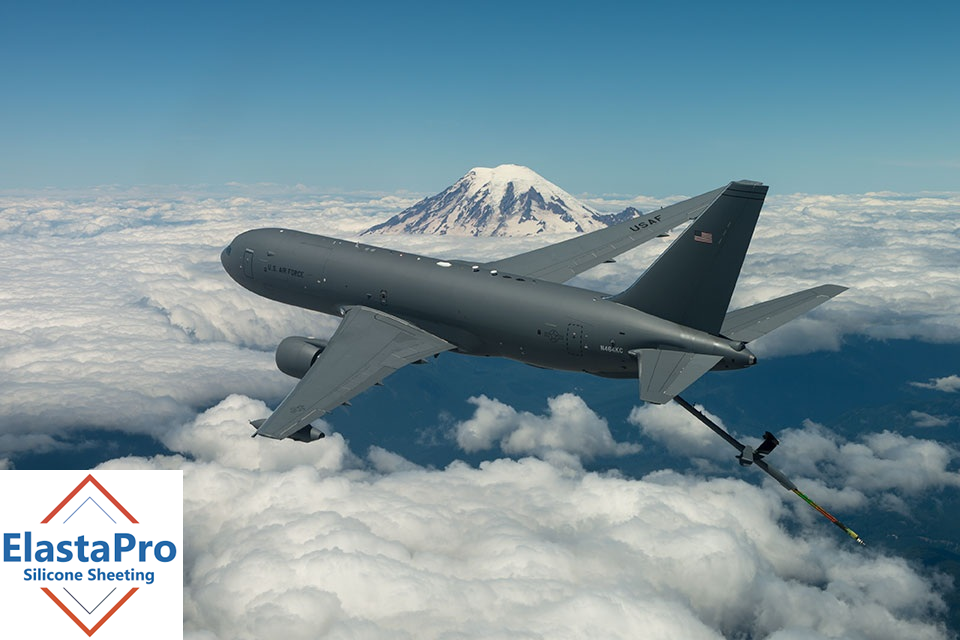
ElastaPro makes military silicones and fluorosilicones that meet U.S. military specifications and standards. Collectively, these high-performance materials are sometimes referred to as MIL-SPEC silicones. ElastaPro supplies them as silicone sheets or uncured silicone compound. They’re proudly Made in America and come with a full Certificate of Analysis (COA) for traceability.
- Silicone sheets arrive ready for die cutting and are available with pressure-sensitive adhesives (PSAs). ElastaPro makes both solid silicone sheet and cellular silicone sheet.
- Uncured silicone compound arrives ready for curing and can be molded, extruded, or calendered.
ElastaPro produces military silicones and fluorosilcones in accordance with our AS9100D and ISO 9001:2015 certified quality management system (QMS). As North America’s largest manufacturer of solid silicone sheet, we’re committed to meeting the highest quality standards while supplying the MIL-SPEC silicones you need with the speed and value you deserve.
What are Military Silicones and Fluorosilicones?
Military Silicones (VMQ), Phenyl Silicones (PVMQ) and Fluorosilicones (FVMQ) are formulated and manufactured to meet U.S. military specifications and standards for products such as seals, gaskets, O-rings, electrical insulation, and vibration damping. They can meet military detail specifications (MIL-DTL) or military standards for rubber products (MIL-R).
The main difference between military silicones and fluorosilicones is that military fluorosilicones contain fluorine additions that maintain silicone’s excellent high-temperature stability and mechanical properties while offering greater resistance to fuel, oil, and other chemicals. Fluorosilicones tend to be more expensive, but they’re required for some applications.
Military silicones and fluorosilicones also include materials that meet related specifications and standards. For example, some aerospace silicones and SAE International silicones have military applications because of their excellent material properties. Examples include AMS silicones and AMSR25988 fluorosilicones. ElastaPro makes these and other spec-grade rubber materials.
Types of Military Silicones and Fluorosilicones
ElastaPro makes MIL-SPEC silicones that meet the following specifications.
- MIL-DTL-25988
- MIL-R-25988
- MIL-R-46089
- MIL-R-6130
- MIL-STD-417 TA
- MIL-STD-670 TE12
- WS14644
MIL-DTL-25988
MIL-DTL-25988 fluorosilicones meet the requirements of a U.S. military detail specification for a fluorosilicone rubber (FVMQ) that resists fuels, oils, and high temperature. Materials are categorized by types, classes, and grades. AMSR25988, an SAE International Standard, superseded MIL-DTL-25988 and is equivalent to the MIL-DTL-25988C, which still appears on some part drawings.
MIL-R-25988
MIL-R-25988 fluorosilicone meets the requirements of U.S. military specification for rubber materials that provide oil and fuel resistance, especially in aerospace applications. It contains two types and two classes. MIL-DTL-25988 superseded MIL-R-25988 and was in turn superseded by AMSR25988. Some part drawings still refer to MIL-R-25988, however.
MIL-R-46089
MIL-R-46089 silicone meets the requirements of a U.S. military specification for a closed-cell sponge silicone. It categorizes materials by grades, forms, and sheet sizes. ElastaPro makes medium-grade silicone sponge sheet in all three MIL-R-46089 sizes (codes): 12” x 12” (1), 24” x 24” (2), and 36” x 36” (3). ASTM D1056 superseded MIL-R-46089, but it’s still referenced on older part drawings.
MIL-R-6130
MIL-R-6130 silicone meets the requirements of a U.S. military specification for a chemically blown cellular rubber, a group of materials more commonly known as sponge rubber and foam rubber. This MIL-SPEC divides materials into types, grades, and conditions (firmness). ElastaPro makes Type II (closed-cell) silicones with medium firmness.
MIL-STD-417 TA
MIL-STD-417 TA silicone meets the requirements of a U.S. military standard for solid elastomer materials. The “TA” designation refers to silicones and is followed by a three-digit number. ElastaPro makes MIL-STD-417 TA silicones that range from TA 405 to TA810. Note that ASTM D2000 superseded this military standard and uses FC, FS, FE, or GE instead of TA.
MIL-STD-670 TE12
MIL-STD-670 TE12 silicone foam meets the requirements of a U.S. military standard for a closed-cell medium-density silicone foam for seals and gaskets. The TE12 designation indicates a specific firmness and density within the larger standard. This soft, compressible material is used to absorb shock and maintain a seal under harsh conditions.
WS14644
WS14655 silicone meets the requirements of a U.S. Navy specification for electrically conductive silicone rubber compounds. It’s divided into types and classes. ElastaPro makes Type III high conductivity, carbon black filled materials. Applications include EMI gaskets, anti-static components, and conductive pads and seals.
Ask ElastaPro for Military Silicones and Fluorosilicones
Do you need military silicones and fluorosilicones in high or low volumes? Whether you need a 2-lb. lab sample or 200,000 pounds of production material, we’re ready to help. That’s not all either. In addition to adhesive lamination, ElastaPro offers roll slitting and product development services. Thank you for learning more about us, and we invite you to contact ElastaPro for more information.