Extreme High Temperature Silicone Sheeting & Uncured Compounds
High Temperature Resistance Up to +500°F
ElastaPro extreme high temperature silicone operates continuously from -85°F to +500°F (-65°C to +260°C) and withstands short-term intermittent peak temperatures up to +600°F (+315°C).
Every batch is Made in USA under ElastaPro’s ISO 9001:2015 / AS9100D quality system and shipped with a complete Certificate of Analysis (COA).
Need High Temp Silicone Sheeting or Slit Rolls?
We supply continuous rolls, pre-cut sheets, and uncured compounds with low minimums and fast lead times.
Request a Quote (RFQ)Extreme High Temperature Silicone Sheets (55 and 60 Durometer)
Standard Sheet Sizes & Roll Dimensions
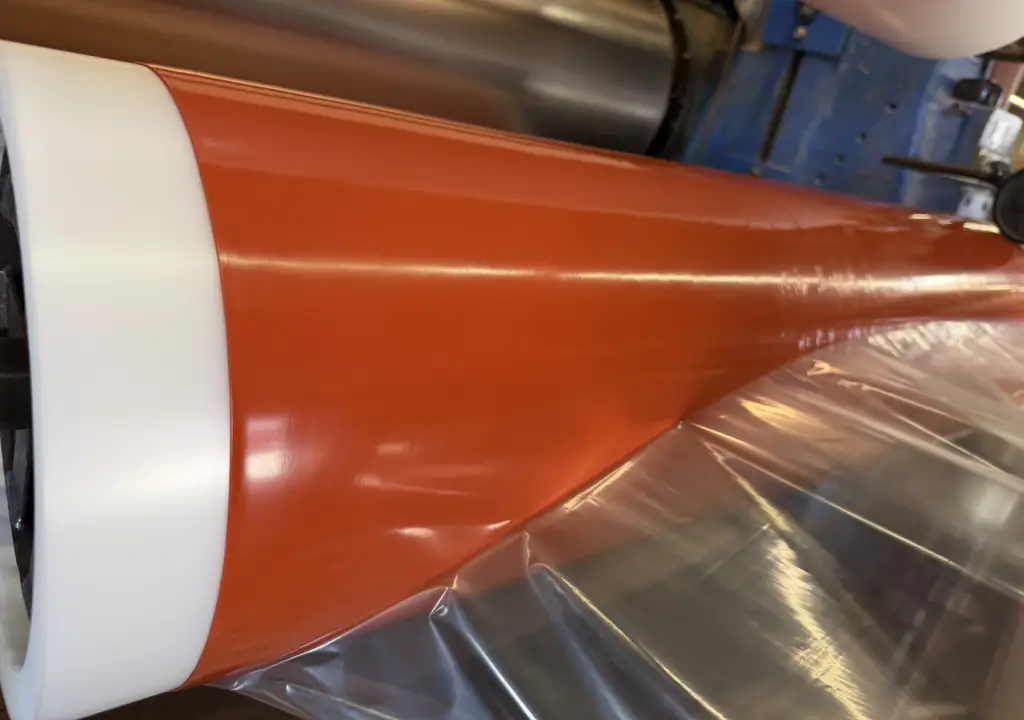
This solid silicone sheet from ElastaPro is available in these sizes and roll dimensions.
| Measurement | Type | Imperial | Metric |
|---|---|---|---|
| Width | Standard | 36" | 914 mm |
| Width | Standard | 48" | 1219 mm |
| Width | Custom | Up to 67" | Up to 1701.8 mm |
| Thickness | Range | 0.020" to 0.375" | 0.508 mm to 9.525 mm |
| Cut Sheet | Standard | 12″ × 12" | 30.48 cm x 30.48 cm |
| Cut Sheet | Standard | 24″ × 24″ | 60.96 cm x 60.96 cm |
| Cut Sheet | Standard | 36″ × 36″ | 91.44 cm x 91.44 cm |
| Cut Sheet | Standard | 48" x 48" | 121.92 cm x 121.92 cm |
| Cut Sheet | Custom | — | — |
| Linear Length | Continuous | Up to 300" ft | Up to 91.44 m |
How Extreme High Temperature Silicone is Made
Extreme high-temperature silicone sheet is manufactured through a carefully controlled compounding and thermal curing process designed to maximize thermal stability and prevent polymer degradation.
The process begins by blending a high-molecular-weight silicone gum base with reinforcing silica fillers to build mechanical strength and tear resistance. Specialized heat-stabilizing additives are thoroughly compounded into the mix.
This compounded rubber is then rolled into continuous sheets using a precision multi-roll calender to achieve uniform thickness.
Finally, the uncured sheeting undergoes vulcanization under heat and pressure, followed by an extended post-cure baking cycle in a circulating air oven. This critical post-cure step removes volatile reaction byproducts, fully cross-links the polymer chains, and locks in the material’s compression set resistance and high-heat endurance.
Extreme High Temperature Silicone FAQs
What temperature can high temp silicone withstand?
ElastaPro extreme high temperature silicone operates continuously from -85°F to +500°F (-65°C to +260°C) and withstands short-term intermittent peak temperatures up to +600°F (+315°C).
What is the difference between standard silicone and high temperature silicone?
Standard silicone begins to degrade, harden, and crack when continuously exposed to temperatures above 400°F (200°C). High temperature silicone uses heat stabilizer technology to preserve elasticity, tensile strength, and compression set resistance up to 600°F.
Can high temp silicone sheeting be die-cut?
Yes. ElastaPro solid high temp silicone sheeting features excellent tear strength and dimensional stability, making it easily die-cut, waterjet cut, or slit into narrow tape rolls for custom gasket fabrication.
What are some high temperature silicone gasket applications?
Die-cutters, gasket fabricators, and OEM engineers utilize ElastaPro’s HT silicone sheeting across demanding manufacturing sectors:
- Aerospace & Defense: Thermal insulation wraps, engine bay fire barrier seals, ducting gaskets, and high-temp wire jackets.
- Industrial Ovens & Processing: Commercial oven door gaskets, vacuum furnace seals, heat sealing strips, and curing chamber curtains.
- Automotive & Transportation: Turbocharger crossover seals, exhaust gas recirculation (EGR) gaskets, and heat shield barriers.
- Electronics & Power Generation: High-temperature transformer insulation pads and power supply thermal interface gaskets.
How does high temp silicone sheet differ from high temp rubber sheet?
High-temperature silicone sheeting uses a synthetic silicon-oxygen backbone, whereas traditional high-temp organic rubber sheets (such as FKM/Viton, EPDM, or fluorosilicones) rely on carbon-based polymer backbones.