ElastaPro’s Total Capabilities: Silicone Manufacturing and More
Did you know that ElastaPro is North America’s largest manufacturer of solid silicone sheet? Here at our AS9100 Registered, Made in USA manufacturing facility in Santa Fe Springs, California, we also offer cellular silicone sheet and uncured silicone compound. More silicone buyers are learning about us, but there’s still some confusion about our total capabilities.
For example, some customers think ElastaPro only fills large orders. Others think we only fill small orders instead. Yet ElastaPro welcomes both types of business. Whether you need a 2-lb. lab sample or 200,000 pounds of production material, we’re ready to meet your needs. Our minimum order quantity is just USD $100, and we can grow with you from laboratory scale to full-scale production.
That’s not all. ElastaPro offers silicone sheeting in standard and custom sizes and can apply pressure-sensitive adhesives (PSAs) to support peel-and-stick installation. We’re not a gasket fabricator, but we do offer value-added services to fabricators and end-users. Along with adhesive lamination, we provide slitting services and are developing exciting new products.
Solid Silicone Sheeting
Solid silicone sheeting from ElastaPro is available in thicknesses from .010” to .500” and widths up to 62”. We calendar up to the some of the widest widths in the industry, and we pride ourselves on offering larger sheet sizes so that fabricators can get more parts per sheet during high-volume production. Our solid silicone sheeting arrives ready for fabrication, but that’s not all we’d like you to know.
ElastaPro offers solid silicone sheets in standard sizes like 36” x 36”. Yet we can also supply you with custom sheet sizes that we’re ready to quote in multiple quantities. ElastaPro offers solid silicone sheeting in a wide variety of silicone grades, and our specification-grade silicones meet challenging specs and come with a full Certificate of Analysis (COA).
Adhesive Lamination
ElastaPro is more than a silicone materials manufacturer. In addition to solid and cellular silicone sheet and uncured compound, we offer adhesive lamination services. The PSAs we apply to silicone sheeting use acrylic, silicone-only, or silicone-acrylic chemistries. Acrylic PSAs are strong and durable, and silicone-acrylic PSAs combine the benefits of both types of materials. Straight silicone PSAs offer the best option for high-temperature performance.
ElastaPro can also laminate different materials together to build composite structures that are up to 3” thick. Fabrication inevitably comes with constraints, but our lamination capabilities mean we can do far more for you. Our ElastaBond adhesive is a silicone “superglue” that supports the creation of thick composites. Applications include aerospace and HVAC equipment, just to name a few.
Roll Slitting and Product Development
The slitting services that ElastaPro offers enable us to slit a master roll of material to a specific width. Examples include solid silicone sheets that are .500” inch thick with a PSA backing. A master roll that’s slit into strips is easy to unwind so that installers can apply the silicone material to an HVAC unit or a recreational vehicle (RV), just to use a few examples.
Finally, because ElastaPro has an in-house laboratory, we’re able to develop new materials to support silicone applications. Today, ElastaPro is the largest supplier of solid silicone sheet in North America. In 2026, we plan to introduce some new exciting products that we expect will bring great value to our customer partners. Thank you for learning more about ElastaPro, and we invite you to contact us for more information.
Thin Silicone Sheet
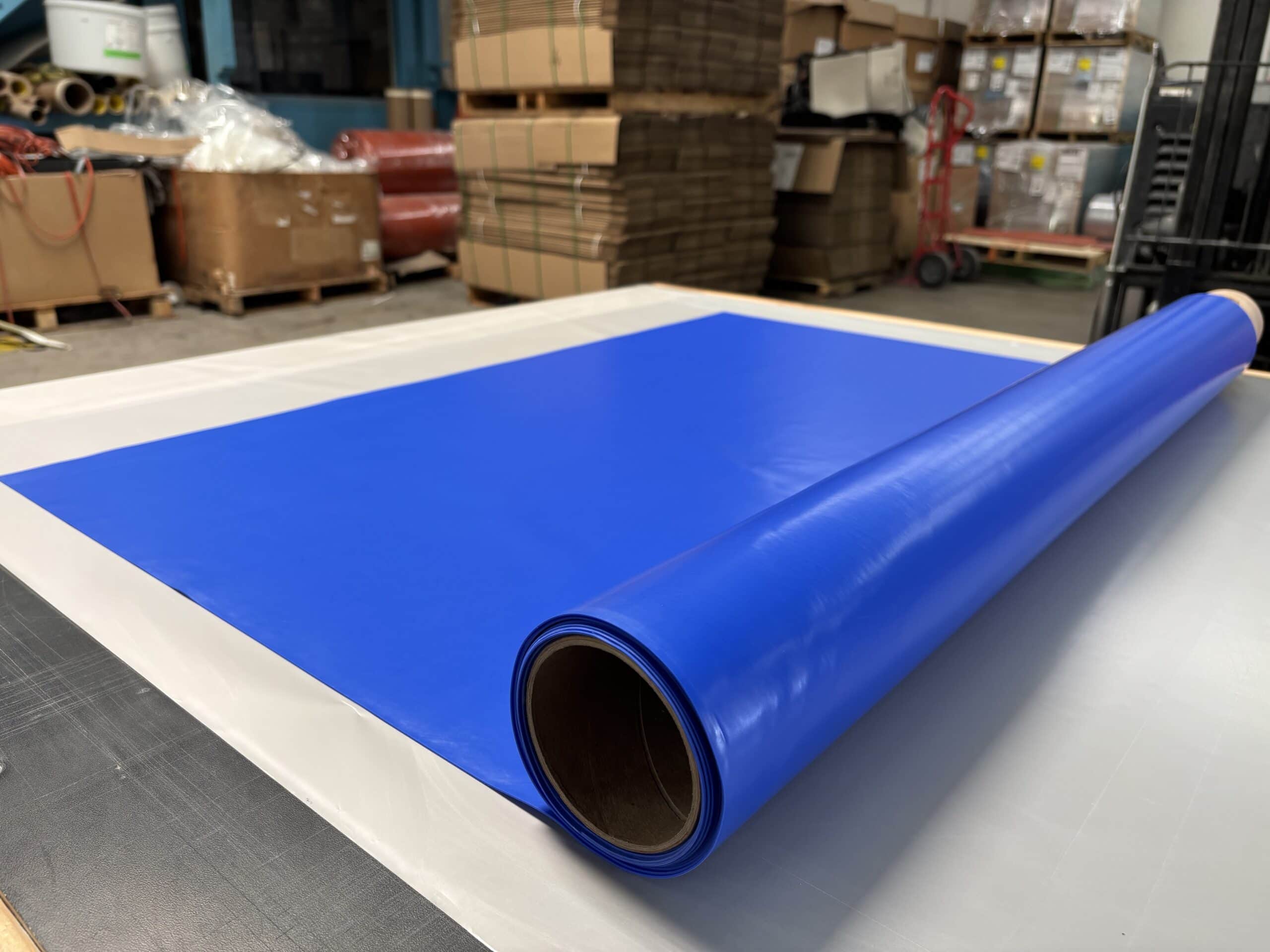
Thin silicone sheet is a high-performance elastomeric material used across industries that demand flexibility, temperature resistance, and durability in compact or precision assemblies. Engineers choose thin silicone sheets when space is limited, sealing tolerances are tight, or lightweight performance is required. These sheets combine the mechanical stability of silicone with the adaptability of thin-gauge materials.
Contact ElastaPro for thin silicone sheet.
Material Properties
Silicone rubber is a synthetic elastomer derived from polysiloxane, a polymer chain featuring alternating silicon and oxygen atoms. This structure gives silicone its unique combination of thermal stability, chemical resistance, and elasticity. Thin silicone sheet retains these base characteristics but in a format designed for precision.
Key properties include:
-
Temperature resistance: Continuous operation from -60°C to +230°C, with some formulations tolerating even higher peaks.
-
Flexibility and resilience: Excellent elongation and compression set performance, allowing for reliable sealing in dynamic or vibrating assemblies.
-
Chemical and UV stability: Resistance to ozone, oxidation, and most environmental agents, ensuring long-term durability.
-
Dielectric strength: Electrical insulation values exceeding 500 V/mil, making it suitable for electronic and EMI/RFI gasket applications.
-
Biocompatibility (optional): Medical and food-grade thin silicones meet FDA, USP Class VI, and ISO 10993 standards for sensitive environments.
Manufacturing and Variants
Thin silicone sheets are produced through calendering, extrusion, or molding processes, depending on the required precision and performance. Calendering yields consistent thickness and smooth surface finish, which is essential for sealing films and membranes. Liquid silicone rubber (LSR) can also be cast into ultra-thin layers with excellent uniformity for optical, electronic, and biomedical uses.
Engineers can select from several material variants:
-
Solid silicone sheet: Offers mechanical strength and dimensional stability.
-
Sponge silicone sheet and foam silicone sheet: Provide compressibility and conformability where surface irregularities must be sealed.
-
Fluorosilicone sheet: Adds resistance to fuels, oils, and solvents for aerospace and automotive environments.
-
Conductive silicone sheet: Filled with metallic or carbon materials for EMI/RFI shielding.
-
Transparent sheet or translucent sheet: Used in lighting, optics, or display applications where clarity is important.
Applications in Engineering Design
Thin silicone sheet is used wherever a durable, flexible, and stable interface is required. Typical applications include:
-
Gaskets and seals: For small enclosures, sensors, and electronics where space and weight savings are critical.
-
Thermal insulation and vibration damping: In electronic assemblies or power systems exposed to heat and mechanical stress.
-
Protective membranes and diaphragms: In fluid control devices, medical pumps, and pressure sensors.
-
Electrical insulation: In high-voltage or sensitive circuitry environments.
-
EMI/RFI shielding layers: When combined with conductive fillers or coatings to prevent electromagnetic interference.
Advantages for Engineers
Thin silicone sheet offers several design advantages. It can be die-cut, laser-cut, or waterjet-cut with tight tolerances, allowing engineers to produce precise gaskets, washers, or films. The material maintains elasticity and performance even at extreme temperatures, reducing maintenance needs. Moreover, thin silicone’s low compression set and long service life contribute to overall system reliability.
From compact electronics to aerospace systems and medical devices, thin silicone sheet represents an ideal combination of performance, precision, and versatility. Its adaptability allows engineers to meet demanding design goals—especially where conventional elastomers fail—making it a cornerstone material in modern high-performance engineering.
Fluorosilicone COA with Every Batch
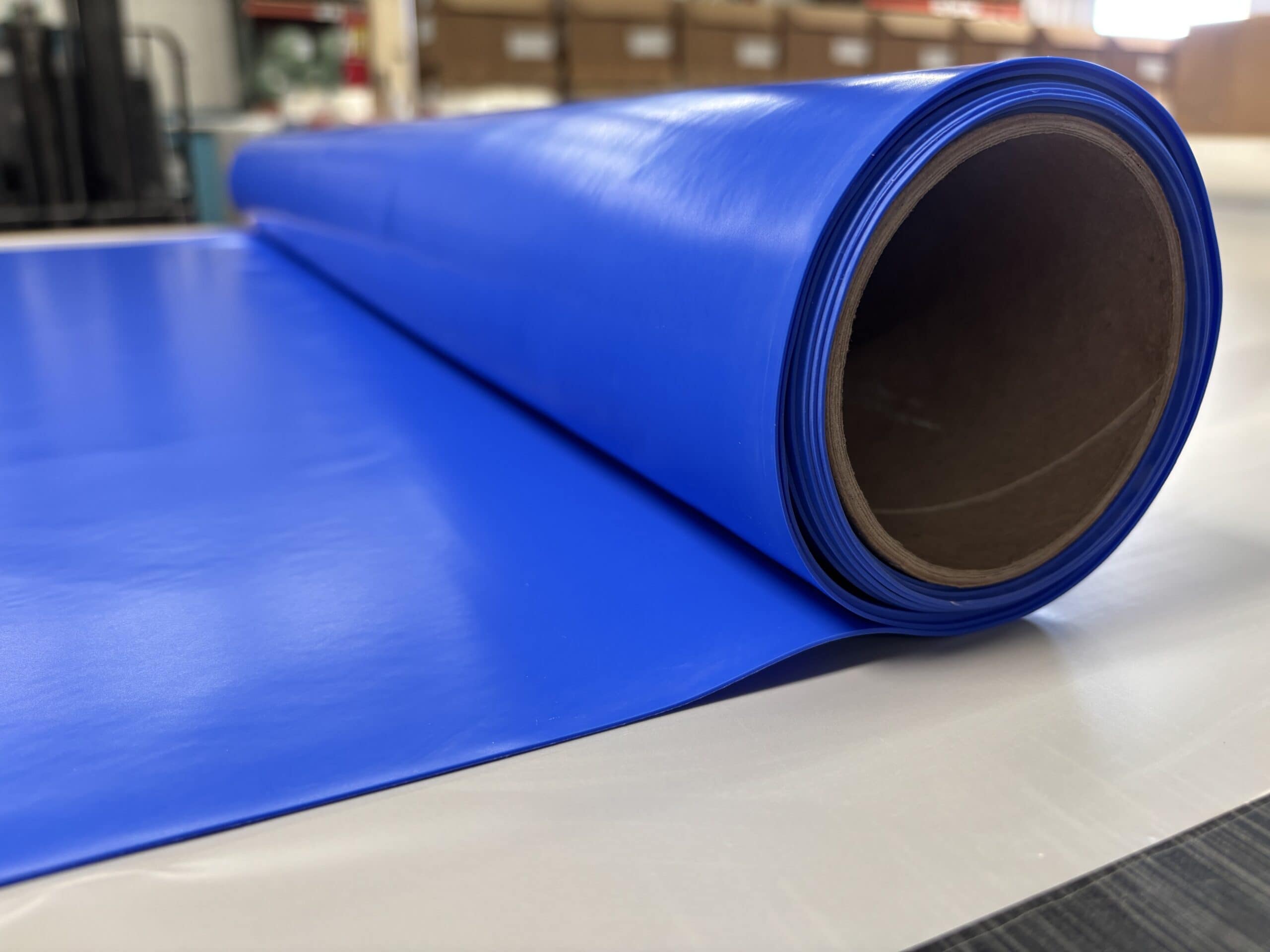
ElastaPro makes fluorosilicone materials at our Made in USA manufacturing facility in Santa Fe Springs, California. Domestic sourcing can help you to reduce supply chain risk, but that’s not the only reason to buy high-performance materials from us. ElastaPro manufactures fluorosilicone rubber as solid sheets and uncured compound in accordance with our ISO 9001:2015 and AS9100D certified quality management system. Moreover, we offer a full Certificate of Analysis (COA) with each batch.
Why Choose Domestic Fluorosilicone Rubber?
Domestic sourcing reduces your supply chain risk by shortening shipping distances, minimizing transportation touchpoints, and allowing for quicker responses to disruptions such as geopolitical disputes, natural disasters, and pandemics. Along with shorter lead times and greater visibility, the benefits include reduced exposure to international trade issues such as tariffs, border closings, and shipping delays. It’s also easier to coordinate and collaborate with a Made in USA manufacturer.
Even if you can’t visit us in California to meet face-to-face, ElastaPro makes communications easy. Whether you pick up the phone, send us an email, or use the chatbot or contact form on our website, we pride ourselves on quick and responsive service. We’re also available for Teams or Zoom calls and regularly update our website with technical content and descriptions. For example, the fluorosilicone page on our website let you download technical data sheets.
Why Ask for a Fluorosilicone COA?
A Certificate of Analysis (COA) is a document that provides the test results for a specific batch of a material. By contrast, a Certificate of Conformance (COC) simply attests that a material meets requirements. In other words, a COC does not provide batch-level test data. That’s a key distinction in industries like aerospace and defense, both of which use fluorosilicone rubber because of its wide temperature range, superior resistance to fuels and solvents, and ability to meet standards.
ElastaPro provides a full COA with each batch and includes key specifications such as tensile strength, elongation, compression set, hardness, and temperature range testing. Importantly, our COAs demonstrate that our flurosilicone rubber complies with standards such as AMSR-25988, which was published by SAE International and supersedes MIL-DTL-25988. Older prints may still reference MIL-R-25988, which is sometimes written as MILR-25988 instead.
What If There’s a Spec Change or Substitution?
Fluorosilicone specs are subject to change, and suppliers sometimes change the ingredients in their products. That’s why ElastaPro performs a full qualification whenever there’s a spec change or we update a raw material. We also conduct full lot-to-lot verification in accordance with the spec, which contains a table for testing during lot-to-lot qualification work. In the AMSR-25988 specification, Table IV outlines material property requirements.
Ask ElastaPro for Quality Fluorosilicones
Do you need spec-grade fluorosilicone rubber with a full COA for traceability? Have you considered how partnering with a Made in USA materials manufacturer can help you to reduce supply chain uncertainty while ensuring quality? For fluorosilicone solid sheet and uncured compound, the name you can trust is ElastaPro. Contact us for proven materials you can depend upon.
Low Durometer Silicone Rubber
Low durometer silicone rubber is a soft, flexible elastomer that offers excellent sealing and cushioning performance in demanding environments. In engineering terms, “durometer” refers to a material’s hardness, typically measured on the Shore A scale for most silicone compounds. Standard silicone rubber is often in the range of 40–70 Shore A, but low durometer grades typically fall between 10–30 Shore A. This softness gives the material unique functional advantages for sealing, vibration control, and conformability.
ElastaPro makes low durometer silicone rubber as solid sheets and uncured compound. Contact us for a quote.
Material Characteristics of Soft Silicones
Low durometer silicone rubber is composed primarily of silicone polymer, reinforcing fillers, and curing agents. Because it’s less densely cross-linked than harder grades, it has a lower resistance to indentation and greater flexibility. It maintains key silicone properties—including thermal stability, UV and ozone resistance, and excellent electrical insulation—while adding the ability to deform easily under pressure. This makes it ideal for applications where a tight seal is required without high compressive forces.
Silicone’s temperature performance is another major benefit. Low durometer grades can typically operate between –60 °C and 200 °C, depending on the formulation. This allows them to remain soft and elastic in both high-temperature engine compartments and low-temperature aerospace or cryogenic applications. Their chemical resistance is also strong against water, weathering, and many common fluids.
Advantages of Low Durometer Silicone Rubber
The softness of low durometer silicone rubber allows it to conform to uneven or irregular mating surfaces. This reduces the need for extremely tight tolerances or surface finishes to achieve an effective seal. For engineers, this means design flexibility: surfaces can be less precise, yet sealing performance remains high.
Another key advantage is reduced compression set stress on mating components. Softer silicone exerts lower clamping force on plastic housings or lightweight structures, helping prevent warping, cracking, or fatigue over time. It can also compensate for tolerance stack-ups or surface imperfections more effectively than harder materials.
Vibration damping is another strength. Low durometer silicone can absorb and dissipate energy, making it useful for reducing vibration and noise in sensitive electronic assemblies or lightweight structures. It’s also often used to protect fragile components from shock.
Common Applications for Low Durometer Silicone Rubber
Engineers often specify low durometer silicone rubber for environmental seals, vibration isolators, and cushioning pads. It is commonly used in enclosures for electronics, including aerospace and defense systems, where soft seals maintain protection against moisture and dust. In medical devices, soft silicone is valued for patient comfort and gentle interface with skin or other sensitive materials.
Automotive engineers use it in gaskets and seals that must accommodate component movement or thermal expansion without leaking. It’s also popular in HVAC and lighting systems where sealing performance must remain reliable despite uneven surfaces or low clamping forces.
When to Use Softer Silicones
Low durometer silicone rubber is ideal when components are delicate, surfaces are irregular, or when maintaining a seal with minimal compression force is required. It’s also advantageous in environments with wide temperature fluctuations or when vibration damping is needed.
However, softer materials may not be appropriate where high mechanical strength or abrasion resistance is required. Engineers should balance softness with durability based on operating conditions.
In short, low durometer silicone rubber provides excellent sealing, flexibility, and environmental resistance—making it a versatile choice for many demanding applications where conformability and low stress are priorities.
Conductive Silicone Sheet FAQs
Sponge Silicone Sheet FAQs
What is Uncured Rubber?
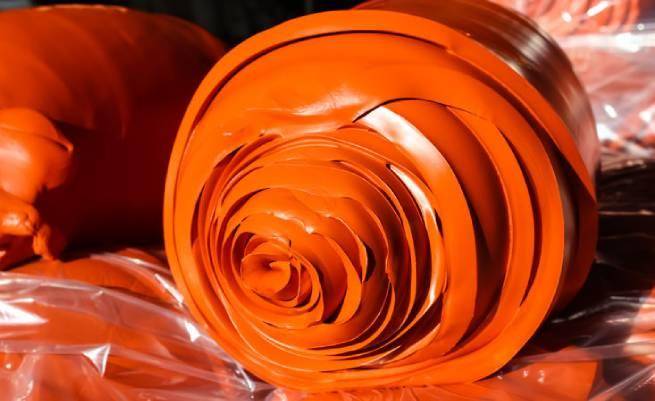
Uncured rubber refers to rubber that has not yet undergone vulcanization or curing, the chemical process that crosslinks polymer chains to give rubber its final mechanical properties. In its uncured state, rubber is soft, pliable, and somewhat tacky. It resembles a dense, malleable putty or dough that can easily be shaped, extruded, or calendered into sheets or profiles.
At the molecular level, uncured rubber consists of long, entangled polymer chains that slide past each other when deformed. Because these chains are not chemically bonded, uncured rubber lacks the elasticity, tensile strength, and heat resistance that characterize cured elastomers. It is thermoplastic in behavior—softening with heat and stiffening when cooled—which allows it to be processed but not yet used as a finished engineering material.
Contact ElastaPro for uncured silicone rubber.
Composition and Processing of Uncured Rubber
Uncured rubber can be derived from either natural rubber (NR), harvested from latex sap, or synthetic rubbers such as silicone, EPDM, nitrile, or fluorocarbon. These raw elastomers are typically compounded with fillers (like carbon black or silica), plasticizers, stabilizers, and curing agents such as sulfur or peroxides.
During processing, uncured rubber is shaped into its desired form—extrusions, molded blanks, or sheets—before vulcanization. This stage is critical because once the rubber is cured, it becomes thermoset and cannot be reshaped without losing integrity. Engineers and manufacturers often handle uncured rubber in sheet, strip, or preform form, allowing for easy placement into molds or assemblies.
The Curing Transformation
The transition from uncured to cured rubber occurs through vulcanization, a heat-activated chemical reaction that introduces crosslinks between polymer chains. These crosslinks limit chain mobility, giving the material its characteristic elasticity and resilience.
For example, natural rubber is commonly cured with sulfur, producing a network structure that enhances mechanical strength, heat resistance, and chemical stability. Silicone rubber, by contrast, may use peroxide or platinum catalysts to achieve crosslinking. Once cured, the material becomes thermoset—meaning it will not melt or flow again when reheated.
Applications and Engineering Implications
Uncured rubber is used primarily as an intermediate material in manufacturing. Engineers and fabricators rely on its soft, conformable state for forming seals, gaskets, or molded parts before curing. It is also used in lamination or bonding processes, where it acts as an adhesive layer that cures in place during assembly.
In repair applications, uncured rubber patches or tapes can be applied to existing rubber components and then vulcanized to create a permanent bond. This approach is common in tire repair, conveyor belt maintenance, and industrial hose manufacturing.
What is Silicone Sheeting?
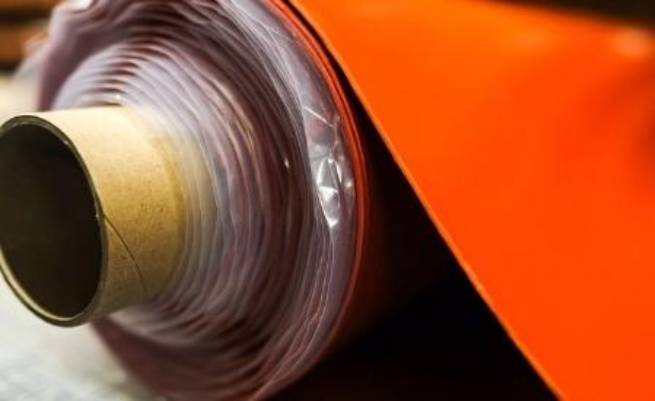
Silicone sheeting is a synthetic rubber commonly used in critical applications due to its exceptional heat resistance. It is also more versatile than other polymers because it retains pliability when exposed to ultraviolet radiation or extreme temperatures. Further, it is resistant to weathering and ozone, making it appropriate for various industrial purposes.
ElastaPro makes solid silicone sheet, foam silicone sheet, and sponge silicone sheet. We also make uncured silicone compound.
Silicone Sheeting Characteristics
The following are the characteristics of silicone sheeting
- Offers high resistance to UV radiation
- Possesses superior temperature resistance compared to synthetic and natural rubber
- Reacts to very few chemical or biological agents
- Maintains flexibility and elasticity regardless of weather conditions
- Made from high-grade compound materials
- Has tensile strength up to 1650 psi
- Insulates electricity well and is easily modifiable based on particular requirements
- Exhibits exceptional metal adherence, especially during molding and extrusion processes
- FDA-approved, making it safe for food and medical uses
Who Makes It?
ElastaPro makes silicone sheeting in a variety of durometers, sizes, thicknesses and colors. We offer specification grade materials, low minimum order quantities, quick lead times, and responsive service. To learn more, contact us.
50 Durometer Silicone Rubber
50 durometer silicone rubber represents a balanced midpoint—firm enough to maintain dimensional stability under compression, yet soft enough to conform to irregular surfaces and create effective seals. Engineers often specify 50 durometer silicone because it delivers an ideal combination of flexibility, resilience, and strength for a wide range of applications.
Contact ElastaPro for 50 durometer silicone rubber.
Understanding 50 Durometer Silicone
On the Shore A hardness scale, elastomers range roughly from 10 (extremely soft, gel-like) to 80 (very hard, nearly rigid). A 50 durometer silicone rubber falls in the medium range, providing a balance of mechanical and physical properties. It maintains excellent elasticity and rebound, offering a good compromise between sealing performance and durability.
Like all silicones, a 50 durometer compound maintains stable properties over a wide temperature range—typically from −60°C to +200°C—and resists ozone, UV radiation, and many chemicals. This makes it suitable for long-term use in both indoor and outdoor environments. It also exhibits low compression set, meaning it maintains its shape and sealing force even after repeated deformation cycles.
Ideal Applications
Engineers commonly use 50 durometer silicone rubber in general-purpose seals and gaskets. It provides sufficient resilience to form tight seals under moderate compression without requiring high closure forces. This makes it an excellent choice for flanged joints, enclosures, lighting housings, and HVAC systems, where sealing reliability and easy assembly are critical.
In electronic equipment, 50 durometer silicone sheets or gaskets act as protective barriers against dust and moisture, while maintaining electrical insulation and dielectric strength. The material’s flexibility allows it to fill surface gaps effectively, ensuring consistent contact across irregular geometries.
In automotive and aerospace applications, this hardness provides effective vibration isolation and resistance to environmental exposure. It is commonly used for engine compartment seals, access panel gaskets, and vibration mounts where the material must resist both heat and mechanical stress.
Additionally, medical-grade 50 durometer silicones are used for components such as pump diaphragms, valves, and tubing, where a balance between flexibility and mechanical integrity is needed. Food-grade versions are also available for processing and packaging environments where cleanliness and compliance with FDA or USP Class VI standards are mandatory.
Design and Performance Considerations
When selecting 50 durometer silicone rubber, engineers should consider operating pressure, compression percentage, and environmental conditions. For static sealing applications, optimal compression typically ranges from 15% to 25% of material thickness. This ensures adequate sealing force without overstressing the elastomer.
The material’s moderate hardness makes it easier to handle during fabrication—whether through die-cutting, molding, or extrusion—while maintaining dimensional stability during installation. However, for applications involving very low clamping force or extremely delicate components, softer silicones (30–40 Shore A) may perform better, while harder grades (60–70 Shore A) are preferred when greater structural support or load-bearing capacity is required.
Conclusion
Fifty durometer silicone rubber is a reliable, all-purpose material that strikes an excellent balance between softness and strength. Its combination of flexibility, temperature resistance, and sealing performance makes it one of the most widely used silicone grades across industries. Whether in electronics, aerospace, medical devices, or general manufacturing, engineers can count on 50 durometer silicone to provide consistent, long-lasting performance in demanding environments.
When you need a seal or component that can flex without failing and endure without hardening, 50 durometer silicone rubber is often the right choice.
Low Outgassing Silicones: Materials, Standards, and Applications
ElastaPro makes low outgassing silicones that meet ASTM E595 requirements and are specially formulated and processed to minimize the release of volatile compounds under vacuum conditions and/or heat. In addition to spacecraft, applications include aerospace, defense, electronics, optics, and medical devices.
ElastaPro produces low outgassing silicones at our Made in USA manufacturing facility in Santa Fe Springs, California and offers these specification grade materials as solid silicone sheet and uncured silicone compound. Choose ASTM E595 silicone in following durometers (hardness) on the Shore A scale: 40, 50, 60, and 70.
Keep reading to learn more and contact us for a quote.
What is Outgassing?
Outgassing refers to the release of volatile organic compounds (VOCs) from a material, typically at reduced pressure (vacuum) or elevated temperatures. Volatiles include residual solvents from processing, unreacted monomers, plasticizers and additives, and degradation products from thermal or environmental stress. Sometimes, outgassing is called off-gassing instead.
In vacuum conditions such as space, the released vapors from outgassing can condense on sensitive surfaces such as optical lenses, sensors, or electronics. This can cause contamination, but it can also degrade performance or result in mission failure. Silicone elastomers are chemically stable and heat resistant, but they can contain low-molecular-weight siloxanes that are prone to volatilization.
What is ASTM E595?
ASTM E595 defines a standard test method for Total Mass Loss and Condensable Volatile Materials from outgassing in a vacuum environment. ASTM International developed this test standard in cooperation with NASA, and it simulates the conditions that materials such as silicones may face when used aboard spacecraft.
Importantly, ASTM E595 provides a consistent, repeatable way to measure how much mass a material loses in avacuum due to outgassing, and how much of that lost mass condenses on nearby surfaces. There are three key metrics.
- Total Mass Loss (TML) is the percentage of initial mass lost by the specimen during the test. This measurement is important, but TML alone does not indicate contamination risk. Some volatiles may not condense on cold surfaces but dissipate harmlessly.
- Collected Volatile Condensable Material (CVCM) is the percentage of material that condenses on a cooled collector plate. CVCM is critical measurement for optical and thermal systems since even a small amount of condensable material can fog lenses, degrade solar panels, or alter thermal emissivity.
- Water Vapor Recovered (WVR) is an optional measurement for materials, such as silicones, that absorb and release water vapor. WVR is less critical in space environments, but it’s important for applications (such as electronic assembly) that may occur in humid conditions.
ASTM E595 provides the framework for measuring these values, but NASA’s own standards define acceptable limits for spacecraft. For example, NASA-STD-6016 specifies that a material must meet the following criteria to be considered low outgassing.
- TML ≤ 1.0%
- CVCM ≤ 0.10%
This dual structure of ASTM providing the test method and NASA providing the acceptance criteria ensures consistency and practical usability across the aerospace sector.
Where are Low Outgassing Silicones Used?
Low outgassing is important for spaceflight and aerospace applications, but engineers also need low outgassing silicones for electronics and semiconductors, medical devices and pharmaceuticals, and optical and precision instruments.
Aerospace and Spaceflight
Outgassed volatiles can condense on telescope mirrors, star trackers, and camera lenses, reducing transmission and resolution. These substances can also condense on thermal control surfaces such as radiators or solar arrays and alter emissivity and absorptivity. In crewed spacecraft, outgassed volatiles may pose toxicity or odor concerns.
Electronics and Semiconductors
In microelectronics, outgassed siloxanes can deposit on contacts or printed circuit boards, leading to insulation failure or corrosion. The low outgassing silicones that ElastaPro provides are used for enclosure sealing, but the electronics industry also needs materials with low levels of outgassing for potting compounds, conformal coatings, and encapsulants.
Medical Devices and Pharmaceuticals
ASTM E595 does not apply to medical devices or pharmaceuticals; however, these industries are also concerned about the migration of volatile compounds that could interfere with sterile environments or analytical equipment. Low outgassing silicones can help improve biocompatibility and analytical purity, but other standards and requirements also apply.
Optical and Precision Instruments
Microscopes, laser systems, and satellites all require pristine optical surfaces. Even trace condensation can cause scattering or absorption, degrading performance. Silicones with low outgassing may be required for these applications.
Ask Elasto Proxy for Low Outgassing Silicones
ElastaPro makes ASTM E595 silicone and supplies these specification grade materials as solid silicone sheet and uncured silicone compound. Solid silicone sheets arrive ready for die cutting and come in thicknesses ranging from .010” to .500” and widths up to 60”. Uncured silicone compound can be molded, extruded, or calendered.
At ElastaPro, we manufacture materials in accordance with our ISO 9001:2015 and AS9100D Certified Quality Management system (QMS) and provide a Certificate of Analysis (COA) with each batch for traceability. Contact us to request a quote, discuss your applications, or receive additional information about how we serve your industry.