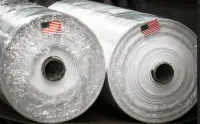
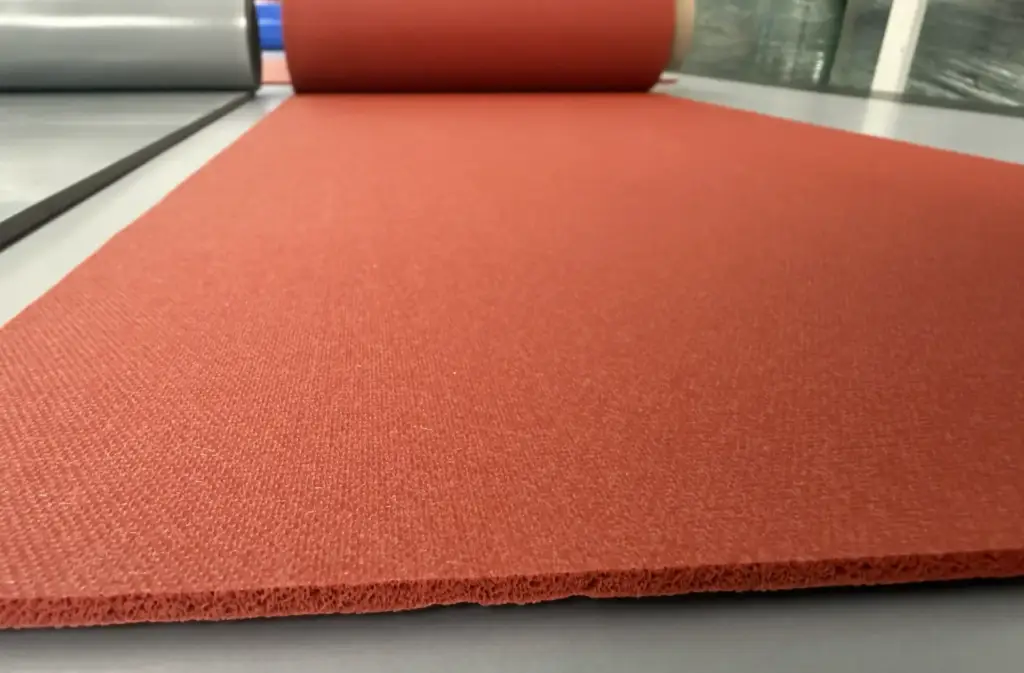
Learn how closed-cell silicone foam from ElastaPro supports low-force enclosure sealing and resists heat and flame while meeting tough safety standards.
Engineers who design enclosures for the aerospace, electronics, and transportation industries face a common challenge. How do you find a gasket material that will stop moisture, heat, and flame without requiring so much clamping force that the enclosure risks bending, warping, or cracking? Solid rubber isn’t the best choice because it can require significant compression to form a tight seal.
Gasket fabricators can propose cellular rubber instead, and cellular silicones are a good choice because they offer environmental sealing, broad temperature resistance, and the ability to meet flame, smoke, and toxicity requirements. Because it’s soft and compressible, medium-density silicone foam – a type of cellular rubber – seals reliably with light fastener torque.
There’s more than one type of silicone foam, however. Open-cell silicone foams provide cushioning, vibration damping, acoustic absorption, thermal insulation, and compressible sealing. Yet they can absorb moisture and lose recovery with repeated heating and cooling cycles. For low-force enclosure sealing that resists heat and flame and meets tough safety standards, there’s a better choice.
Closed Cell Silicone Foam Properties
Silicone foam from ElastaPro excels in these applications because gases and moisture cannot easily enter or escape its closed cells during temperature swings, such as in avionics bays, outdoor telecommunications cabinets, and electric vehicle (EV) battery systems. This material also helps prevent unwanted heat transfer that could affect electronics or avionics.
ESS12M, ElastaPro’s closed-cell medium-density foam, offers additional advantages. For example, it keeps water absorption below 5% over 24 hours for reliable environmental sealing in splash-prone or outdoor enclosures. In addition, it resists temperatures ranging from -55°F to 400°F (-55°C to +200°C continuous) and maintains its properties despite thermal stresses.
After 22 hours at 212°F, this cellular rubber exhibits roughly 1% compression set. That’s important because enclosure gaskets need to return to their original thickness when the force of a closed door is removed. If a gasket takes a permanent compression set instead, it becomes flattened and will leak over time. With the wrong type of rubber, this can happen beginning with gasket installation.
Thin-walled housings won’t withstand the high closure forces required to compress solid rubber, but ElastaPro’s medium-density closed-cell silicone foam has a compression deflection of just 7 to 11 psi (per ASTM D1056) and a soft 15±5 Shore C durometer. Using lightweight fasteners, technicians can achieve a tight environmental seal without damaging enclosure covers.
Additional Closed Cell Silicone Foam Advantages
Mechanical sealing is important, but engineers who design enclosures for the aerospace, electronics, and transportation industries may also need to meet flame, smoke, and toxicity (FST) requirements. ElastaPro’s closed-cell silicone foam is formulated to meet UL 94 V-0 for flame resistance and passes SMP-800C toxic gas emission requirements. In addition, it meets AMS3195 requirements for aviation and aerospace.
ESS12M also has a dielectric strength of 1.6 kV/mm and a permittivity of 1.39. That allows thin cross-sections to double as an effective insulating barrier between live components and grounded chassis walls. For outdoor enclosures, this material’s inherent resistance to UV radiation and ozone prevents surface crazing and embrittlement during multi-year field service.
Whether you’re an engineer or a gasket fabricator, ElastaPro makes the closed cell silicone foam you need. Contact us to request a quote or for more information.