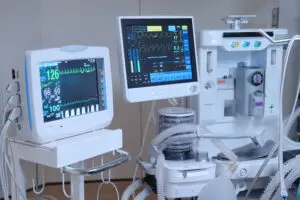
What the End of USP Class VI Means for Medical Manufacturers
For decades, USP Class VI has been a benchmark for material safety among medical device and component manufacturers. This standard

Biocompatible silicone materials are specifically formulated and cleanroom-processed to satisfy FDA 21 CFR 177.2600, USP Class VI, and ISO 10993 requirements.
Offering low extractables, non-reactive surfaces, and sterilizability, these elastomers are essential for medical devices, fluid transfer tubing, and pharmaceutical processing equipment. Medical device engineers and buyers require full regulatory compliance and lot-to-lot consistency.
Review our technical articles on biocompatibility testing, regulatory documentation, and sanitary sealing solutions designed for life science applications.

For decades, USP Class VI has been a benchmark for material safety among medical device and component manufacturers. This standard
Medical manufacturing demands materials that are safe, stable, and capable of performing reliably in environments where human health is at
In industries where patient safety, biocompatibility, and contamination control are non‑negotiable, USP Class VI Requirements serve as one of the
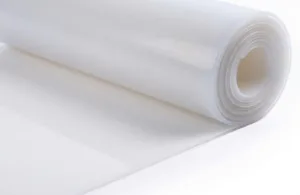
Medical silicone sheeting plays a critical role in healthcare applications that require performance, stability, and biocompatibility under demanding conditions. Unlike

Medical grade silicones from ElastaPro are used for sealing and gasketing in medical devices and equipment. These platinum-cured materials meet

USP Class VI sealing products encompass a broad spectrum of geometries, materials, and manufacturing approaches. From simple O-rings and gaskets