
Electrically Conductive Silicone
Electrically conductive solid silicone sheet from ElastaPro is fabricated into gaskets and used in electrical cabinets and printed circuit boards (PCBs). These solid silicone sheet materials are also fabricated into elastomeric shielding gaskets that provide resistance against electromagnetic interference (EMI) and radio frequency interference (RFI).
Conductive silicones are compounds that combine the advantages of silicone rubber with the electrical properties of metals. Silicone offers thermal stability over a wide temperature range and resist water, ozone, and ultraviolet (UV) light. When filled with tiny metal particles, silicones combine environmental sealing with EMI shielding.
65 Durometer Electrically Conductive Silicone Sheet
Electrically conductive silicone sheet from ElastaPro comes in the following durometer.
This electrically conductive silicone material is easily die cut and provides a superior gasket and sealing solution. Thicknesses range from .020” to .375”. This product is black in color
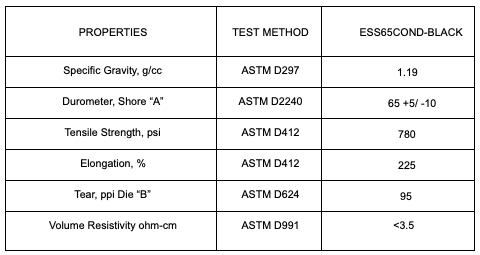
Material Properties for Electrically Conductive Silicone Sheet
Some conductive silicone sheets use metal or metal-coated particles as the rubber filler material. The dielectric strength of silicone rubber depends on the specimen. High voltage silicone rubber is a highly specialized material and not typical of conductive silicone rubber sheet.
This table shows properties and test methods for specific products.
Specification Grade Electrically Conductive Silicone
ElastaPro also provide specification grade electrically conductive silicone that meets two U.S. military standards.
- MIL-DTL-83528
- WS14644
These military silicones are available as solid sheets and uncured compounds.
What is Silicone Electrical Conductivity?
Pure silicone is electrically insulating instead of electrically conductive. However, by adding metal or metal-coated particles to a silicone base, the resulting compound becomes electrically conductive. That’s because metals, unlike most polymers (including silicone), conduct electricity. When considering “What is silicone electrical conductivity?” then, this compounding process is essential.
Additional Information about Conductive Silicone Sheet
Electrically conductive silicone is a specialized type of silicone rubber formulated with conductive fillers—such as carbon, silver, nickel, or graphite—to provide electrical conductivity while retaining the flexibility, durability, and environmental resistance of standard silicone. This material is designed to conduct electricity or shield electronic components from electromagnetic interference (EMI) and radio-frequency interference (RFI), making it essential for applications in electronics, telecommunications, aerospace, automotive, and medical devices.
Conductive silicone maintains the core advantages of traditional silicone, including wide temperature stability (typically from -55°C to +200°C), resistance to moisture, UV radiation, ozone, and many chemicals, and long-term aging performance. By incorporating conductive fillers, it gains the ability to dissipate static charges, ground electrical currents, and block EMI/RFI emissions.
One common use is in EMI shielding gaskets, where conductive silicone is used to seal enclosures and prevent electromagnetic interference from leaking in or out. It is also used in keypad contacts, connector gaskets, and grounding pads. The material is often manufactured as sheets, extrusions, molded parts, or coated fabrics, and can be tailored for specific electrical resistivity requirements—ranging from low-resistance grades for grounding to higher-resistance versions for static dissipation.
Electrically conductive silicone is especially valuable in environments where both environmental sealing and electrical conductivity are required, such as in military and aerospace enclosures governed by MIL-DTL-83528 standards. It is also used in cleanrooms and medical electronics where non-corrosive, biocompatible conductive materials are needed.
Overall, electrically conductive silicone combines the protective and flexible properties of silicone rubber with the functionality of metal-based conductivity. This makes it a go-to solution for engineers designing sensitive electronic systems that must operate reliably in electrically noisy or environmentally demanding conditions.
Essential Role of Electrically Conductive Silicone in Electronic Devices
Electrically conductive silicone enhances the performance and reliability of electronic devices due to its unique properties. Here are some of its key roles:
EMI and RFI Shielding
Conductive silicone is often used to shield electronic devices from electromagnetic interference (EMI) and radio frequency interference (RFI). This is essential in preventing interference between different components within a device, which can cause malfunctions. The silicone’s conductive fillers (silver or carbon particles) create a barrier that absorbs and reflects electromagnetic waves to protect sensitive components.
Thermal Shielding
Some conductive silicones are designed to effectively dissipate heat. Such dual functionality can protect components from electrical and thermal stresses, improving the device’s overall durability and lifespan.
Static Discharge Protection
This silicone can safely dissipate static electricity and is particularly important in environments where static buildup can damage delicate electronic components. By providing a reliable path to ground, conductive silicone helps prevent electrostatic discharge (ESD), which can cause sudden and catastrophic failure of electronic circuits.
Reliable Electrical Connections
Electrically conductive silicone can create secure and consistent electrical pathways between device parts. It guarantees that grounding is effective and reliable over long periods, even under varying environmental conditions.
Flexible Circuitry and Connections
Conductive silicone is often used in flexible circuits and wearable electronics where traditional metallic connections are impractical. Its ability to maintain conductivity while stretched, compressed, or bent allows for innovative designs in modern electronics.
Sealing and Bonding
This type of silicone can seal and bond components while providing an electrical connection. Such dual-purpose functionality is especially valuable in compact devices with limited space.
Key Applications
The following applications demonstrate how conductive silicone is crucial in advancing modern electronics and engineering:
- Thermal interface materials (TIMs): Conductive silicone can be used in thermal pads and gap fillers to enhance heat dissipation between electronic components and heat sinks to ensure proper cooling.
- Printed circuits and flexible conductors: This material is used in flexible printed circuit boards (PCBs) and other flexible electronics, which enables the development of bendable and stretchable electronic devices.
- Pressure and touch sensors: Conductive silicone is used in sensors that detect pressure or touch, making it useful in touchscreens and wearable electronics.
- Conductive keypads: The material is often utilized to construct keypads and switches, where its conductive properties allow the closing of electrical circuits when pressed.
- Electrical contacts and seals: In batteries and fuel cells, conductive silicone creates seals and connections that maintain electrical conductivity while withstanding harsh environmental conditions.
- Biomedical sensors: Conductive silicone is used in medical devices for sensors and electrodes due to its biocompatibility, which allows the devices to conform to the body’s shape.
- Flexible wearable electronics: This material is essential in wearable devices like smartwatches and fitness trackers, providing electrical connectivity while maintaining comfort.
Frequently Asked Questions (FAQs)
What is Conductive Silicone Sheet?
Conductive silicone sheet is a specialized elastomeric material designed to combine the flexibility and environmental resistance of silicone rubber with electrical conductivity. Unlike standard silicone, which is an electrical insulator, conductive silicone sheet is engineered by incorporating conductive fillers—typically carbon, silver, nickel, or other conductive particles—into the base silicone polymer. This creates a versatile material that provides reliable electrical grounding, electromagnetic interference (EMI) shielding, and electrostatic discharge (ESD) protection while maintaining the softness and resilience of silicone.
What is the Material Composition and Structure of Conductive Silicone Sheet?
The base polymer is high-quality silicone rubber known for its thermal stability, weather resistance, and flexibility. Conductive performance is achieved by dispersing conductive particles throughout the silicone matrix. The type, size, and concentration of these fillers determine the sheet’s electrical properties, including volume resistivity and shielding effectiveness.
-
Carbon-filled silicone provides moderate conductivity at a lower cost and is often used in general EMI shielding applications.
-
Nickel-graphite filled silicone offers improved shielding and corrosion resistance.
-
Silver-aluminum or silver-plated fillers provide the highest conductivity levels and are used in mission-critical applications such as aerospace or defense electronics.
The result is a sheet material that can function both as a gasket and as part of an electrical grounding or shielding system.
What are the Key Performance Characteristics?
Conductive silicone sheets maintain many of the physical advantages of standard silicone rubber. They can typically operate in temperatures ranging from –60 °C to 200 °C without losing flexibility or performance. They are resistant to UV exposure, ozone, and most environmental stressors, making them suitable for both indoor and outdoor use.
Electrical properties are a key differentiator. Depending on the formulation, conductive silicone can achieve volume resistivity levels low enough to meet EMI and ESD protection requirements for electronic enclosures. The material’s surface remains pliable, allowing it to maintain good electrical contact under low compression forces.
Another important characteristic is stability over time. Unlike some conductive coatings or films, conductive silicone maintains its performance through repeated compression cycles and environmental exposure.
What are the Advantages of Conductive Silicone Sheet?
For engineers, the main advantage is the ability to achieve both environmental sealing and electrical conductivity in a single material. Conductive silicone can replace the need for separate seals and conductive components, simplifying assembly and improving reliability.
Its softness and conformability allow it to create a reliable EMI shield even when mating surfaces are uneven or subject to tolerance variations. Because it exerts lower clamping forces than metal gaskets, it is particularly useful in lightweight enclosures or sensitive assemblies where excessive pressure could cause damage.
What are Some Common Engineering Applications?
Conductive silicone sheets are widely used to fabricate EMI gaskets, grounding pads, and conductive seals. They are frequently die-cut or waterjet-cut into custom shapes for electronic housings, communications equipment, aerospace and defense systems, and medical devices.
They are also used in equipment that must meet electromagnetic compatibility (EMC) regulations, such as shielding seams, joints, and access panels in electronic enclosures. Their thermal stability makes them suitable for use near heat-generating components without loss of conductivity.
When Do You Use Conductive Silicone Sheet?
Engineers should consider conductive silicone sheet when both environmental sealing and EMI/ESD protection are required. It is ideal for gasketing around electronic enclosures, especially in applications where weight, space, or assembly simplicity are concerns.
However, for extremely high current-carrying applications or where mechanical wear is high, metal-based solutions may be more appropriate.
In summary, conductive silicone sheet is a high-performance material that blends electrical conductivity with the proven reliability of silicone elastomers. For engineers, it offers a practical and efficient solution for EMI shielding and grounding applications in demanding environments.
Choose ElastaPro Silicone Sheeting for Top-Notch Conductive Solutions!
At ElastaPro Silicone Sheeting, we provide electrically conductive silicone with unmatched precision. Our advanced solid silicone materials are also engineered into elastomeric shielding, offering exceptional resistance against EMI and RFI. With our superior components, you can ensure reliable electrical grounding, effective shielding, and enhanced conductivity!
Contact us today for innovative conductive silicones that bring reliability and excellence to your projects.